Sunday, November 25, 2007
Camille Pissarro - The Light Capturer


Among the other impressionists, I love Camille Pissarro (1830-1903) the most. Pissarro was the most successful in capturing the many-dimensioned reality of a place and was one of the most productive also. He was able to render precisely the look of the weather, the feel of the atmosphere and the sense of time of year. His ability in capturing the weather with different lighting was remarkable. And among other impressionists, Pissarro was one of the first to experiment with the techniques and among the last to abandon them.

Monday, May 7, 2007
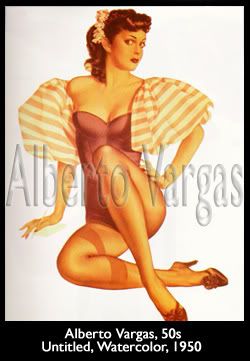
Alberto Vargas (1896-1982): Brings Beauty to All Women
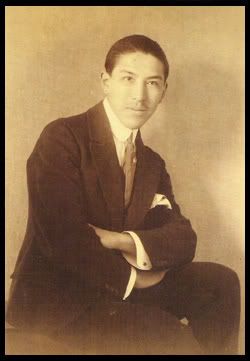
But in 1916, the course of the First World War prompted him to interrupt his education, and he fled Europe. Planning to return to Peru, he was held over in New York City waiting for a ship to take him home.He took a walk through the city on a glorious summer day with the bells tolling for noon and he fell in love immediately with the America Girl. Alberto believed until the very day he died that American women were the most beautiful in the world.
“All of a sudden the doors opened and out poured these girls. Oh my gosh, so many beautiful girls. So right then and there I decided I had to stay”.
In 1939,Alberto received his American citizenship.
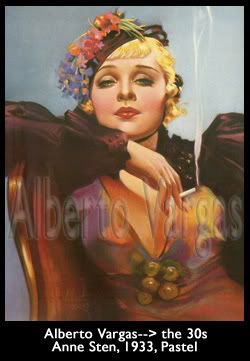
Vargas’s timing was perfect. The artistic environment was invigorating, fast-paced and exciting. It was the Jazz Age, and flappers and art deco were the vogue. Alberto worked hard, retouching negatives and drawing hats for a living. He was developing his unique skill in water-color, oil and pastels. He knew, however, that one day he was going to be a great artist.
His famous quote was: “What is more beautiful than a beautiful girl?”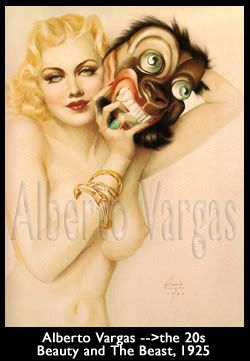

Sunday, April 29, 2007
Impressionism --Catching The Light
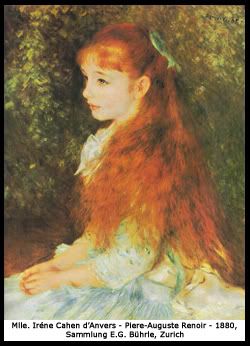
Before, objects had been painted mostly in studio which gave result to lack of brightness, a condition that could be achieved only when objects were painted outside, in the sunlight. In their endeavor to depict nature more and more truthfully the painters came up against the problem of colored shadows.
“One morning one of us had run out of black;
and that was the birth of Impressionism.
–Pierre Auguste Renoir—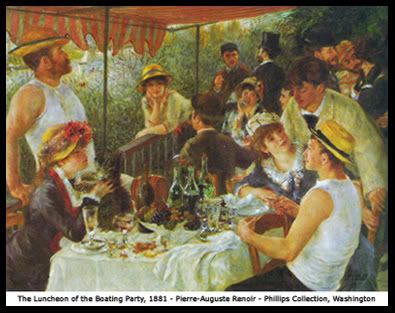
What they were looking for was beauty in the life of the people around them, i.e. in the intimate circle of the family, on a walk, during their leisure time, while having a lively chat in a garden party, or under the rapidly changing conditions of the big city.
Monday, March 26, 2007
Vincent Van Gogh
Van Gogh's quotes:
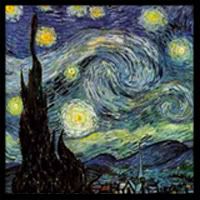
Van Gogh is one of the greatest artist in oil painting art. He is known as the father of expressionist. After had been explored several styles (including adapting japanese painting art), and influenced by impressionism, his technique had grown more and more expressive. His paintings such as Starry Night Over the Rhone (1888), Cafe Terrace at Night (1888), Starry Night (1889), and Sunset: Wheat Fields Near Arles (1888) show his highest achievement, both emotionally and technically, near the end of his life, when he decided to shoot himself. As seen in those 3 paintings, his strokes were short and more impassioned and the colors he used were bright and striking.
It is very useful to know what an artist thinks.. to understand his mind, his philosophy.. than just trying to implement the artist's techniques.
“Indigo with terra sienna, Prussian blue with burnt sienna, really give much deeper tones than pure black itself. When I hear people say ‘there is no black in nature’, I sometimes think, ‘There is no real black in colors either’. However, you must beware of falling into the error of thinking that the colorists do not use black, for of course as soon as an element of blue, red, or yellow is mixed with black, it becomes a gray, namely, a dark, reddish, yellowish, or bluish gray.”
(Letter to Theo van Gogh, June 1884)
"I retain from nature a certain sequence and a certain correctness in placing the tones; I study nature, so as not to do foolish things, to remain reasonable. However, I don't mind so much whether my color corresponds exactly, as long as it looks beautiful on my canvas, as beautiful as it looks in nature."
(Letter to Theo van Gogh, October 1885)
"Cobalt is a divine color and there is nothing as fine for putting an atmosphere round things. Carmine is the red of wine and is warm and lively like wine. The same goes for emerald green too. It's false economy to dispense with them, with those colors. Cadmium as well."
(Letter to Theo van Gogh, 28 December 1885)
"Instead of trying to reproduce exactly what I see before me, I make more arbitrary use of color to express myself more forcefully."
(Letter to Theo van Gogh, 11 August 1888)
"To exaggerate the fairness of hair, I come even to orange tones, chromes and pale yellow ... I make a plain background of the richest, intensest blue that I can contrive, and by this simple combination of the bright head against the rich blue background, I get a mysterious effect, like a star in the depths of an azure sky."
(Letter to Theo van Gogh, 11 August 1888)
Van Gogh on Plein-Air Painting: "Just try going outside and painting things on the spot! All sorts of things happen then. I had to pick off a good hundred or more flies from [my] canvases ... not to mention dust and sand [nor]the fact that if one carries them through heath and hedgerows for a couple of hours, a branch or two is likely to scratch them ... and that the effects one wants to capture change as the day wears on."
(Letter to Theo van Gogh, July 1885)
Van Gogh on Photographic Portraits: "I painted two pictures of myself lately, one of which has rather the true character ... I always think photographs abominable, and I don't like to have them around, particularly not those of persons I know and love.... photographic portraits wither much sooner than we ourselves do, whereas the painted portrait is a thing which is felt, done with love or respect for the human being that is portrayed."
(Letter to Wilhelmina van Gogh, 19 September 1889)